Geiger counters have long been used in the recovery of exotic materials that may contain radioactive particles. From detecting meteorites to space debris the instruments have held their place in modern history since the dawn of the atomic age. In 1979 the instruments played a significant role in the recovery [...] Read more →
Russian Officials examine camp site. On January 23, 1959, ten students and young graduates from the Ural Polytechnic Institute set out for a winter trek through Russia’s northern Ural Mountains. One turned back after a few days with joint pain. The other nine continued. Their leader was a 23-year-old engineering student [...] Read more →
SDR Radio for Beginners: How to Listen for Anomalous Signals A $25 USB dongle has turned an entire generation of hobbyists into radio operators without licenses, technical training, or any hardware beyond a laptop. That’s not an exaggeration — the RTL-SDR dongle, originally designed as a cheap television receiver for [...] Read more →
Most people who want to run a serious sky-watch spend about forty-five minutes planning the observation setup and then three hours sitting in an uncomfortable chair getting cold. The uncomfortable chair problem is actually important — if you’re miserable by midnight you’ll pack up before anything happens, and the most interesting things at [...] Read more →
Science in Plain English · Particle Physics · 2023 A plain-English review of the landmark 2023 ALPHA experiment that finally answered one of the oldest questions in physics — and why one man who died in 1727 deserves a share of the credit. Reviewing: Anderson et al., [...] Read more →
Author’s Note ON APRIL 27, 1949, the U.S. Air Force stated: “The mere existence of some yet unidentified flying objects necessitates a constant vigilance on the part of Project ‘Saucer’ personnel, and on the part of the civilian population. “Answers have been—and will be—drawn from such factors as [...] Read more →
Edward James Ruppelt – St. Louis Post-DispatchPhoto published on Mar 08, 1953 From 1952 to 1969, the United States Air Force ran the longest official UFO investigation in American history out of Wright-Patterson Air Force Base in Ohio. They called it Project Blue Book, and by the time they shut it [...] Read more →
In December 1980, US Air Force personnel encountered an unknown craft in a Suffolk forest over three nights. The deputy base commander recorded it in real time. The tape is public domain. In the early hours of December 26, 1980, a security patrol at RAF Woodbridge in Suffolk, England reported [...] Read more →
Click here to read a copy of The Anti-Gravity Bible Read more →
When you leave Earth’s timezones behind, how do astronauts keep track of time — and how long does it take to get there in the first place? [...] Read more →
A photo of a purported UFO over Passaic, New Jersey in 1952. (Photo by: Universal History Archive/Universal Images Group via Getty Images) Before 2017 the standard government position on UFOs was approximately: not our department, probably misidentifications, please stop asking. That position collapsed in December of that year when the New [...] Read more →
Roughly 44,000 kilograms of meteoritic material falls on Earth every day. Most of it lands in the ocean or burns up entirely on the way down, but a meaningful fraction reaches the surface intact, and some of that ends up in fields, deserts, dry lake beds, and beaches where a metal detector [...] Read more →
The Money Pit was discovered in 1795 by a teenager named Daniel McGinnis who found a circular depression in the ground on a small island off the coast of Nova Scotia and started digging. Oak platforms appeared every ten feet. At ninety feet, the bottom flooded with seawater through a system of [...] Read more →
When Lieutenant Colonel Charles Halt walked into Rendlesham Forest in December 1980 with a team of airmen, he brought a radiation detector. This wasn’t theatrical — it was standard procedure for a military officer investigating an unknown object near a base that housed nuclear weapons. What his equipment found was elevated radiation [...] Read more →
The argument about Bigfoot tends to go one of two ways: either you’ve never looked at the evidence closely and think it’s obviously ridiculous, or you have looked at it and can’t quite explain certain things away. The serious researchers — and there are serious researchers — don’t claim certainty. They claim [...] Read more →
|
Oak Island: What Investigators Have Actually Found 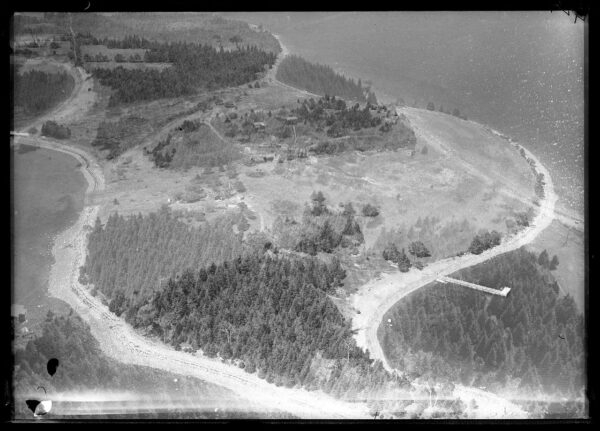
The Money Pit was discovered in 1795 by a teenager named Daniel McGinnis who found a circular depression in the ground on a small island off the coast of Nova Scotia and started digging. Oak platforms appeared every ten feet. At ninety feet, the bottom flooded with seawater through a system of engineered drainage tunnels that had been built into the surrounding beach. Whatever is down there — if anything — was put there by someone who really didn’t want it found.
That’s the core of the Oak Island mystery and it hasn’t changed in 230 years of digging.
The theories about what’s buried have run the full range from Captain Kidd’s pirate gold to Knights Templar relics to Shakespeare’s original manuscripts to the Holy Grail and the Ark of the Covenant. Franklin D. Roosevelt was among the historical treasure hunters who invested time and money in the search. The island has consumed at least $50 million in modern excavation alone, killed six people, and yielded more questions than answers.
What has actually been recovered is worth knowing, because it’s not nothing. A 1652 Spanish copper coin found in the swamp suggests activity on the island predating the Money Pit discovery by over a century. Two King Charles II Britannia coins from the 1600s were found by metal detector. A 16th century garnet pin was recovered on Lot 8 near where Daniel McGinnis once lived. A copper brooch with stamped symbols that an archaeologist dated to 16th century European religious use, possibly older. Iron swages — blacksmithing tools — dated to the 14th century, found on the western end of the island. At 160 feet down in the Money Pit, fragments of parchment and leather bookbinding. A stone well on the western side of the island that apparently never freezes in winter and may be 800 years old, the only spot outside the Money Pit area where water testing has found elevated silver traces.
Ground-penetrating radar in Season 12 of the History Channel series detected a cavity at 127 feet in the Money Pit area. A structure in the swamp was identified that looks like a deliberate container. A dye test in Borehole 10-X failed, producing no useful data about the flood tunnel system.
No treasure has been found. Not in 230 years.
In March 2025, an analytical chemist named Michael Barber published a book arguing that the treasure was never in the Money Pit — that the pit was an intentional decoy, and that a geometric map laid out in boulders and stone formations across the island’s surface, consistent with Knights Templar cartographic methods, points to a location that hasn’t been excavated. His LiDAR analysis suggests the actual site is undisturbed.
Whether that’s the answer or the 76th theory that doesn’t pan out is genuinely unknown. What isn’t unknown is that something was engineered on that island centuries ago by people who understood hydraulics, had significant resources, and went to extraordinary lengths to keep it protected. Whatever it was, it’s still there.
|
|