








The argument about Bigfoot tends to go one of two ways: either you’ve never looked at the evidence closely and think it’s obviously ridiculous, or you have looked at it and can’t quite explain certain things away. The serious researchers — and there are serious researchers — don’t claim certainty. They claim that the evidence is better than most people assume, that some of it is genuinely hard to dismiss, and that the absence of a body is not the same as proof of absence for an animal that, if it exists, likely inhabits some of the densest and most remote forest in North America.
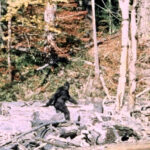
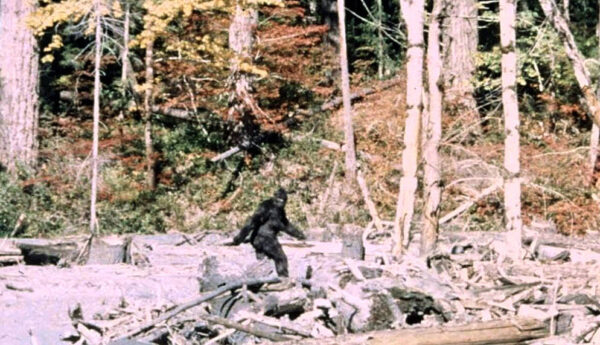
The Patterson-Gimlin film is still the center of the conversation and probably will be until something more definitive surfaces. It was shot on October 20, 1967, at Bluff Creek in California’s Six Rivers National Forest. Roger Patterson and Bob Gimlin were on horseback when their horses spooked. Patterson pulled a rented 16mm camera from his saddlebag and filmed 59.5 seconds of a large, upright, hair-covered figure walking away across a sandbar. The subject — nicknamed Patty — turns and looks at the camera in a moment that’s been analyzed frame by frame for nearly six decades. The complete film is shown below.
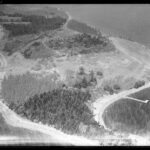
Patterson died in 1972 still insisting the film was real. Gimlin, born in 1931, is still alive and has consistently maintained the same. The film site was lost for decades due to re-growth after a flood and was only relocated in 2011 by a group of researchers called the Bluff Creek Project.
What makes the film hard to dismiss isn’t the quality of the footage — it’s terrible. What makes it hard to dismiss is everything that physical analysis keeps finding. Dr. Jeff Meldrum, a professor of anatomy and anthropology at Idaho State University, has published extensive work on the subject’s gait. The bent-knee walk, the arm proportions, the visible flexion of muscle groups under the coat — his conclusion is that these characteristics are not consistent with a human in a suit and that replicating them would have required biomechanical knowledge that didn’t exist in 1967 commercial costuming. Hollywood costume designers from the era, including people who worked on Planet of the Apes, have said they couldn’t have built the suit. That’s not proof. But it’s not nothing.
The DNA evidence is a harder story. Most hair samples submitted over the decades have tested as known animals — bears, humans, various wildlife. Some haven’t matched anything cleanly. A 2024 study from the University of Idaho’s biology department reportedly found unidentified primate DNA sequences in environmental samples collected from the Pacific Northwest, though the findings remain contested and haven’t been replicated at scale. The history of claimed Bigfoot DNA has enough false starts that caution is warranted, but the environmental DNA methodology being used now is substantially more sophisticated than earlier hair analysis.
No body has ever been found. No bones. No confirmed remains of any kind. For a breeding population to exist, dozens of individuals would need to be moving through forests that have trail cameras, hunters, and researchers in them constantly. That is the central problem, and no serious researcher pretends otherwise. The most honest position in Bigfoot research is also the most unsatisfying: the evidence is genuinely better than it should be for something that probably doesn’t exist, and we don’t have what we’d need to settle it.
That being said, Bigfoot hunters abound and I have been known to be one of them. We did our fair share back in the summer of 1982 while stationed at the Presidio of Moneterey California at the DLIFLC or the Defense Language Institute Foreign Language Center. We fondly called our year there studying foreign languages a years’ vacation with pay on the Bay of Monterey. I say languages due to the fact there were a group of us that left Lackland AFB together in the Spring of ’82, studying Korean, Arabic, Spanish, Polish, and a few others. I met an FBI agent studying Chinese; he was the only person in his class. Navy Seals teams and Green Berets would come through for a dose of Spanish before heading off to some jungle paradise deep in the bowels of South America. There is always a communist to seek out somewhere is there not? There is nothing like living in paradise for a solid year on Uncle Sam’s dime. I was in the Air Force and we lived like kings. With plenty of leisure time, we took to Bigfoot hunting on the weekends, diving off into Big Sur’s grand forests of magnificent redwoods that were as ancient as the land itself. I never caught a Bigfoot, but sure caught plenty of poison ivy. I will leave it there for now, but there are more stories to tell and some of these adventures left the hair standing up on the back of our necks.