Russian Officials examine camp site. On January 23, 1959, ten students and young graduates from the Ural Polytechnic Institute set out for a winter trek through Russia’s northern Ural Mountains. One turned back after a few days with joint pain. The other nine continued. Their leader was a 23-year-old engineering student [...] Read more →
Roughly 44,000 kilograms of meteoritic material falls on Earth every day. Most of it lands in the ocean or burns up entirely on the way down, but a meaningful fraction reaches the surface intact, and some of that ends up in fields, deserts, dry lake beds, and beaches where a metal detector [...] Read more →
When Lieutenant Colonel Charles Halt walked into Rendlesham Forest in December 1980 with a team of airmen, he brought a radiation detector. This wasn’t theatrical — it was standard procedure for a military officer investigating an unknown object near a base that housed nuclear weapons. What his equipment found was elevated radiation [...] Read more →
Most people who want to run a serious sky-watch spend about forty-five minutes planning the observation setup and then three hours sitting in an uncomfortable chair getting cold. The uncomfortable chair problem is actually important — if you’re miserable by midnight you’ll pack up before anything happens, and the most interesting things at [...] Read more →
The argument about Bigfoot tends to go one of two ways: either you’ve never looked at the evidence closely and think it’s obviously ridiculous, or you have looked at it and can’t quite explain certain things away. The serious researchers — and there are serious researchers — don’t claim certainty. They claim [...] Read more →
Author’s Note ON APRIL 27, 1949, the U.S. Air Force stated: “The mere existence of some yet unidentified flying objects necessitates a constant vigilance on the part of Project ‘Saucer’ personnel, and on the part of the civilian population. “Answers have been—and will be—drawn from such factors as [...] Read more →
Science in Plain English · Particle Physics · 2023 A plain-English review of the landmark 2023 ALPHA experiment that finally answered one of the oldest questions in physics — and why one man who died in 1727 deserves a share of the credit. Reviewing: Anderson et al., [...] Read more →
Edward James Ruppelt – St. Louis Post-DispatchPhoto published on Mar 08, 1953 From 1952 to 1969, the United States Air Force ran the longest official UFO investigation in American history out of Wright-Patterson Air Force Base in Ohio. They called it Project Blue Book, and by the time they shut it [...] Read more →
When you leave Earth’s timezones behind, how do astronauts keep track of time — and how long does it take to get there in the first place? [...] Read more →
Geiger counters have long been used in the recovery of exotic materials that may contain radioactive particles. From detecting meteorites to space debris the instruments have held their place in modern history since the dawn of the atomic age. In 1979 the instruments played a significant role in the recovery [...] Read more →
The Money Pit was discovered in 1795 by a teenager named Daniel McGinnis who found a circular depression in the ground on a small island off the coast of Nova Scotia and started digging. Oak platforms appeared every ten feet. At ninety feet, the bottom flooded with seawater through a system of [...] Read more →
SDR Radio for Beginners: How to Listen for Anomalous Signals A $25 USB dongle has turned an entire generation of hobbyists into radio operators without licenses, technical training, or any hardware beyond a laptop. That’s not an exaggeration — the RTL-SDR dongle, originally designed as a cheap television receiver for [...] Read more →
A photo of a purported UFO over Passaic, New Jersey in 1952. (Photo by: Universal History Archive/Universal Images Group via Getty Images) Before 2017 the standard government position on UFOs was approximately: not our department, probably misidentifications, please stop asking. That position collapsed in December of that year when the New [...] Read more →
In December 1980, US Air Force personnel encountered an unknown craft in a Suffolk forest over three nights. The deputy base commander recorded it in real time. The tape is public domain. In the early hours of December 26, 1980, a security patrol at RAF Woodbridge in Suffolk, England reported [...] Read more →
Click here to read a copy of The Anti-Gravity Bible Read more →
|
What UAP Disclosure Actually Means: A Timeline From 2017 to Now 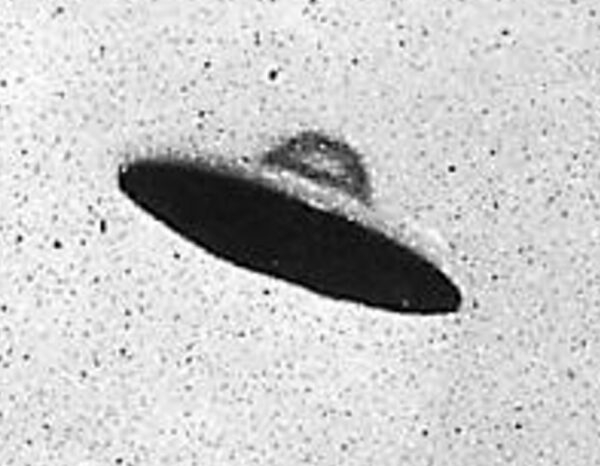 A photo of a purported UFO over Passaic, New Jersey in 1952. (Photo by: Universal History Archive/Universal Images Group via Getty Images) Before 2017 the standard government position on UFOs was approximately: not our department, probably misidentifications, please stop asking. That position collapsed in December of that year when the New York Times published a story revealing that the Pentagon had been running a secret $22 million program called the Advanced Aerospace Threat Identification Program from 2007 to 2012. The program’s director, Luis Elizondo, had resigned in protest the month before the story ran, arguing internally that the phenomenon was real, urgent, and being ignored. Three Navy videos came with the story — footage shot from military aircraft of objects performing maneuvers that no known aircraft could replicate. The Pentagon later confirmed the videos were authentic.
That was the opening of a door that has been widening ever since.
In 2019 the Navy officially acknowledged the videos and established formal reporting procedures for pilots encountering UAP. In 2020 the Pentagon officially released those same three videos. In June 2021 the Director of National Intelligence released a preliminary assessment documenting 144 UAP incidents between 2004 and 2021. Of those, 143 had no explanation. One was identified as a deflating balloon. The report explicitly noted that some objects demonstrated flight characteristics that no known US or foreign technology could explain.
In 2022 Congress held the first public hearing on UFOs in over fifty years. In July 2023 the House Oversight Committee convened a hearing that changed the conversation significantly. Three witnesses testified under oath: Navy pilot David Fravor, who described a 2004 encounter with a white Tic-Tac shaped object that moved in ways that made his F/A-18 look like it was standing still; Ryan Graves, a Navy pilot who testified his squadron saw similar objects daily for years off the East Coast; and David Grusch, a former intelligence officer who stated under oath that the US government has recovered non-human craft and biological materials from crash sites, and that these programs have been hidden from Congressional oversight. The Intelligence Community Inspector General had already found Grusch’s claims credible and urgent.
In September 2025 another hearing convened, this one featuring Air Force veterans who described encounters at Vandenberg Space Force Base. Jeffrey Nuccetelli described five separate UAP incidents between 2003 and 2005, including a red glowing square the size of a football field hovering over the base during missile testing. The pattern of these hearings — objects near nuclear facilities, near launch sites, near areas of the most sensitive military activity — has been consistent across every major testimony for decades.
The institutional response has also shifted. The National Archives established a permanent archive category specifically for UAP records. AARO, the Pentagon’s current UAP office, has accumulated over 2,000 cases. Defense Secretary Pete Hegseth confirmed in early 2026 that Pentagon teams are actively working on disclosure compliance. A presidential directive mandating disclosure progress was issued the same year.
What this timeline shows is not a sudden revelation but a managed, incremental release of information that has been gaining institutional momentum for nearly a decade. Each step has been larger than the last. Whether that trajectory leads to full disclosure or stalls in classification bureaucracy is the open question, but the era of official denial is clearly over.
|
|